prbpcoordination@igad.int
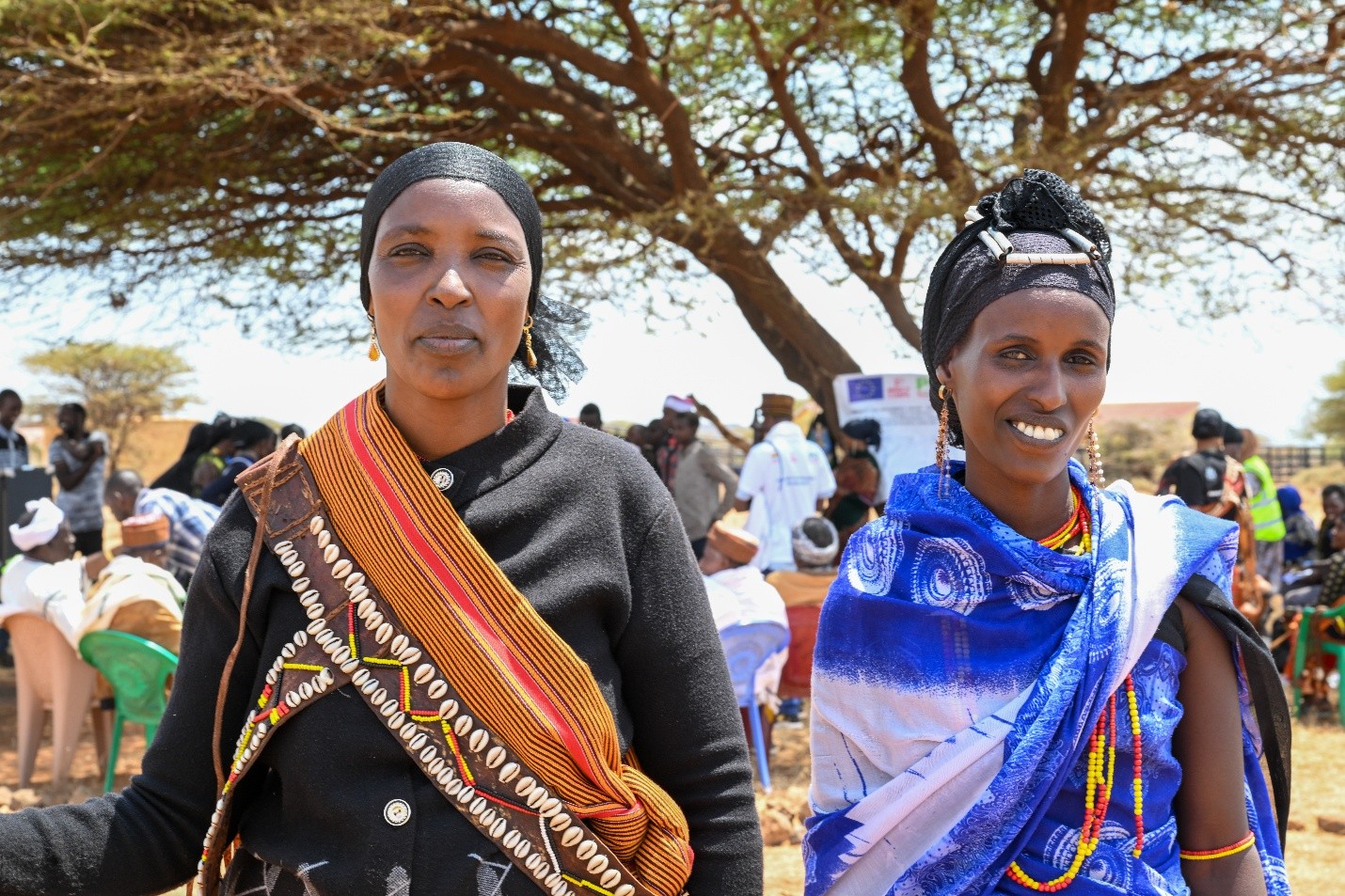
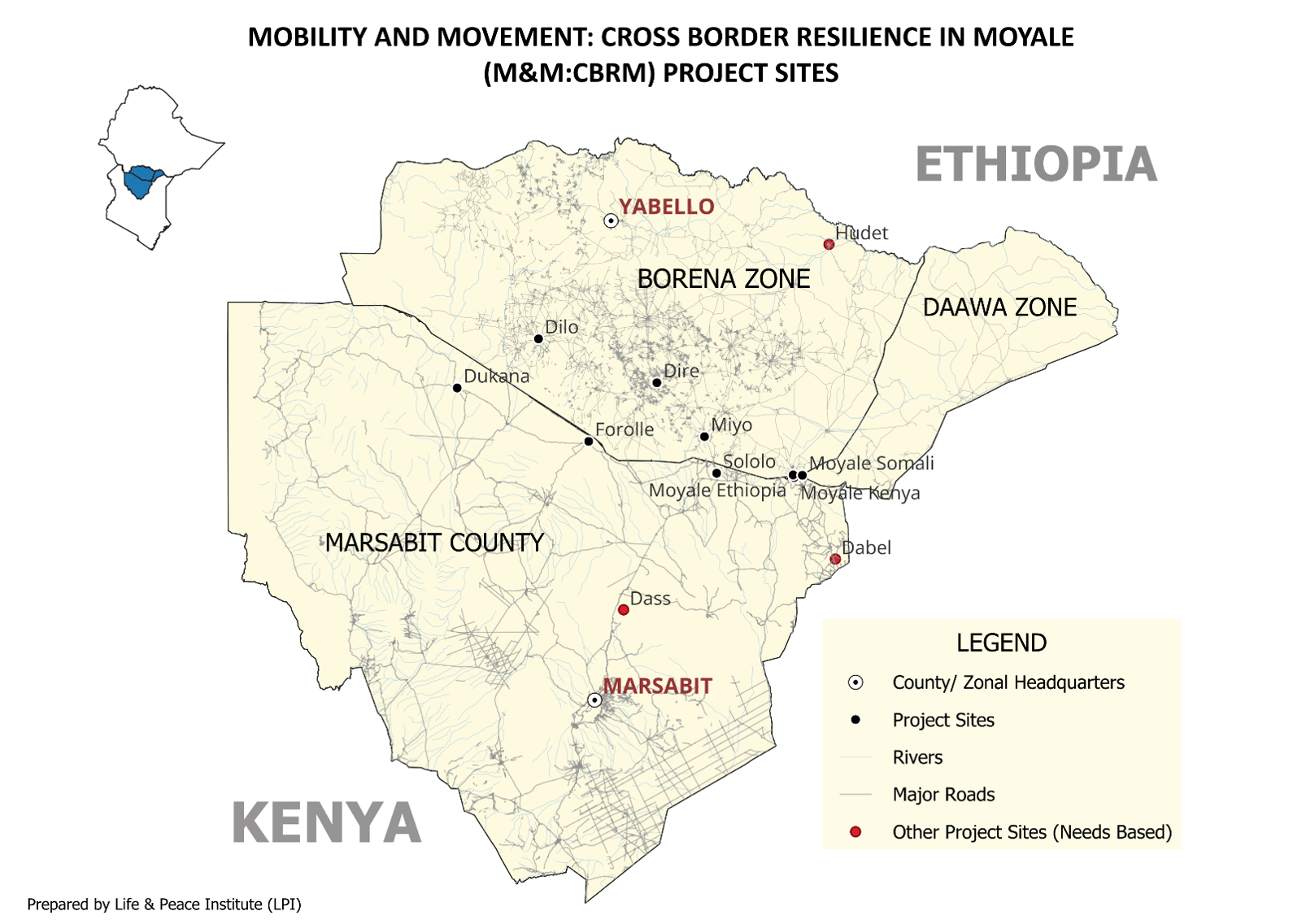
Mobility and Movement: Cross-Border Resilience in Moyale (M&M: CBRM) Project is a three-year cross-border resilience project implemented by Life & Peace Institute in partnership with Mercy Corps, and Pastoralist Concern. The project is funded by the European Union under the broader Peaceful and Resilient Borderlands Programme, which seeks to strengthen peace, resilience, and sustainable development in border communities across the Horn of Africa.
The project aims to enhance the effectiveness of conflict prevention and mitigation, disaster risk reduction and management, and resilience building among cross-border communities that are frequently affected by conflict, climate shocks, resource competition, and economic vulnerabilities.
01-Capacity and Learning
Commonly held understanding of political, economy, livelihoods, climate and conflict dynamics, enhanced ability to act on this understanding
02-Peace building and conflict transform
Mutually beneficial relationships across conflict lines, and infrastructures for peace built/strengthened to maintain these relationships
03-Resilient Livelihoods
Sustainable avenues for income generation and resource management and use that to strengthen peaceful coexistence and facilitate climate change adaption
04-Policy engagements
Local perspective and needs reflected in decision-making, communities shape policy processes, policy frameworks becoming more meaningful
M&M is guided through the following three pillars:
The Moyale Cluster serves as a strategic cross-border corridor linking Kenya and Ethiopia, where pastoral mobility, trade, and shared natural resources require coordinated governance and sustained collaboration. Under the Peaceful and Resilient Borderlands Programme (PRBP), GIZ has played a key coordination role, bringing together IGAD specialised institutions, national and county governments, implementing partners, and local communities to strengthen peacebuilding, climate resilience and cross-border governance.
Working in close collaboration with the Life & Peace Institute (LPI), CEWARN, ICPAC and ICPALD, GIZ has facilitated coordinated planning, technical support and institutional dialogue to strengthen local peace infrastructures while ensuring alignment with regional IGAD frameworks. This collaborative approach has promoted ownership, enhanced institutional coordination, and improved the sustainability of interventions across the Kenya–Ethiopia borderlands.
Output 1: Reinforced Cross-Border Coordination and Early Warning
GIZ coordinated the implementation of cross-border peacebuilding and early warning interventions in partnership with CEWARN, LPI, county governments and Ethiopian regional authorities to strengthen institutional collaboration and preparedness.
Key engagements included:
The coordinated interventions strengthened institutional collaboration and early warning systems by:
As the implementing partner, the Life & Peace Institute (LPI) complemented GIZ's coordination role by strengthening community-level peace infrastructures and fostering dialogue among border communities. LPI facilitated inclusive peacebuilding processes, supported community mediation initiatives, strengthened local conflict management mechanisms, and promoted meaningful participation of women, youth and traditional leaders in cross-border peace processes. This community-based engagement reinforced PRBP's broader objective of building resilient and locally owned conflict prevention systems.
Output 2: Strengthening Cross-Border Policy Coordination and Awareness
Working closely with IGAD ICPALD, county governments, veterinary departments and LPI, GIZ coordinated policy awareness and sensitization forums to strengthen institutional understanding of regional livestock health and cross-border cooperation frameworks.
The engagements focused on:
The coordinated engagements resulted in:
Output 3: Coordinating Sustainable Transboundary Resource Management
Recognising the importance of shared natural resources to pastoral livelihoods, GIZ coordinated technical collaboration between ICPALD, county governments, Ethiopian authorities, implementing partners and community stakeholders to strengthen transboundary resource governance.
The coordinated process included:
The coordinated engagements contributed to:
Output 4: Strengthening Cross-Border Governance and Coordination Architecture
GIZ facilitated the implementation of the PRBP governance and coordination architecture across the Moyale Cluster by convening government institutions, IGAD specialised entities, implementing partners and development actors through structured coordination platforms.
The cluster actively participated in:
The strengthened coordination mechanisms contributed to:
Overall Coordination Impact
Through its coordination role in the Moyale Cluster, GIZ has strengthened collaboration between Kenya and Ethiopia by linking regional policy frameworks with community-led peacebuilding and resilience initiatives. By working closely with IGAD institutions, government agencies and the Life & Peace Institute, the programme has enhanced institutional coordination, improved early warning and anticipatory action systems, strengthened governance of shared natural resources, and fostered inclusive cross-border dialogue. This coordinated approach has created stronger foundations for sustainable peace, resilience and regional cooperation in the Moyale borderlands.