prbpcoordination@igad.int
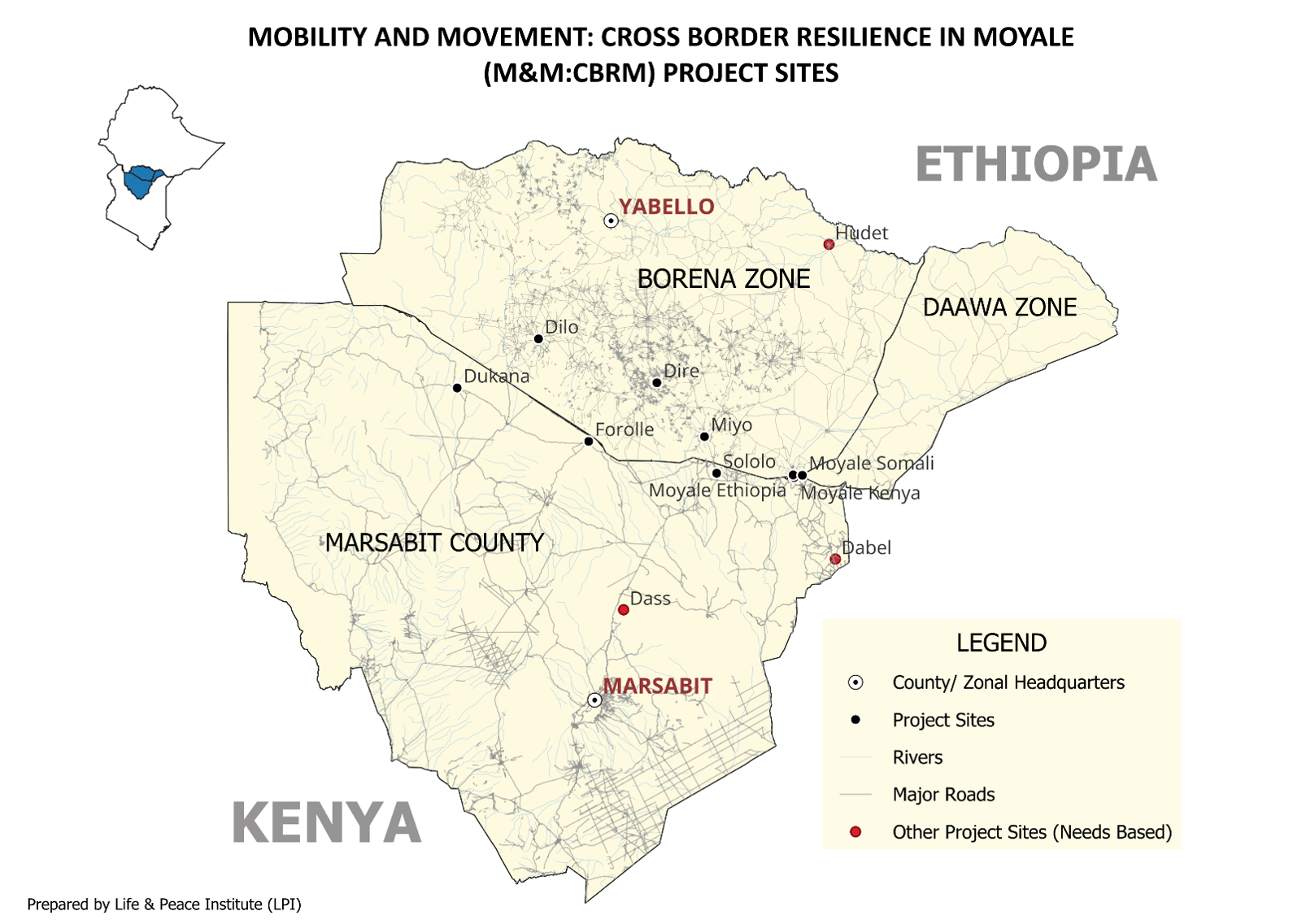
Moyale-Moyale Cluster

Building resilient and peaceful communities across the Ethiopia-Kenya border

Mobility and Movement: Cross-Border Resilience in Moyale (M&M: CBRM) Project is a three-year cross-border resilience project implemented by Life & Peace Institute in partnership with Mercy Corps, and Pastoralist Concern. The project is funded by the European Union under the broader Peaceful and Resilient Borderlands Programme, which seeks to strengthen peace, resilience, and sustainable development in border communities across the Horn of Africa.

The project aims to enhance the effectiveness of conflict prevention and mitigation, disaster risk reduction and management, and resilience building among cross-border communities that are frequently affected by conflict, climate shocks, resource competition, and economic vulnerabilities.
3
Years  
4
cross-border corridors
PRBP M&M: CBRM
Programme
PRBP M&M: CBRM
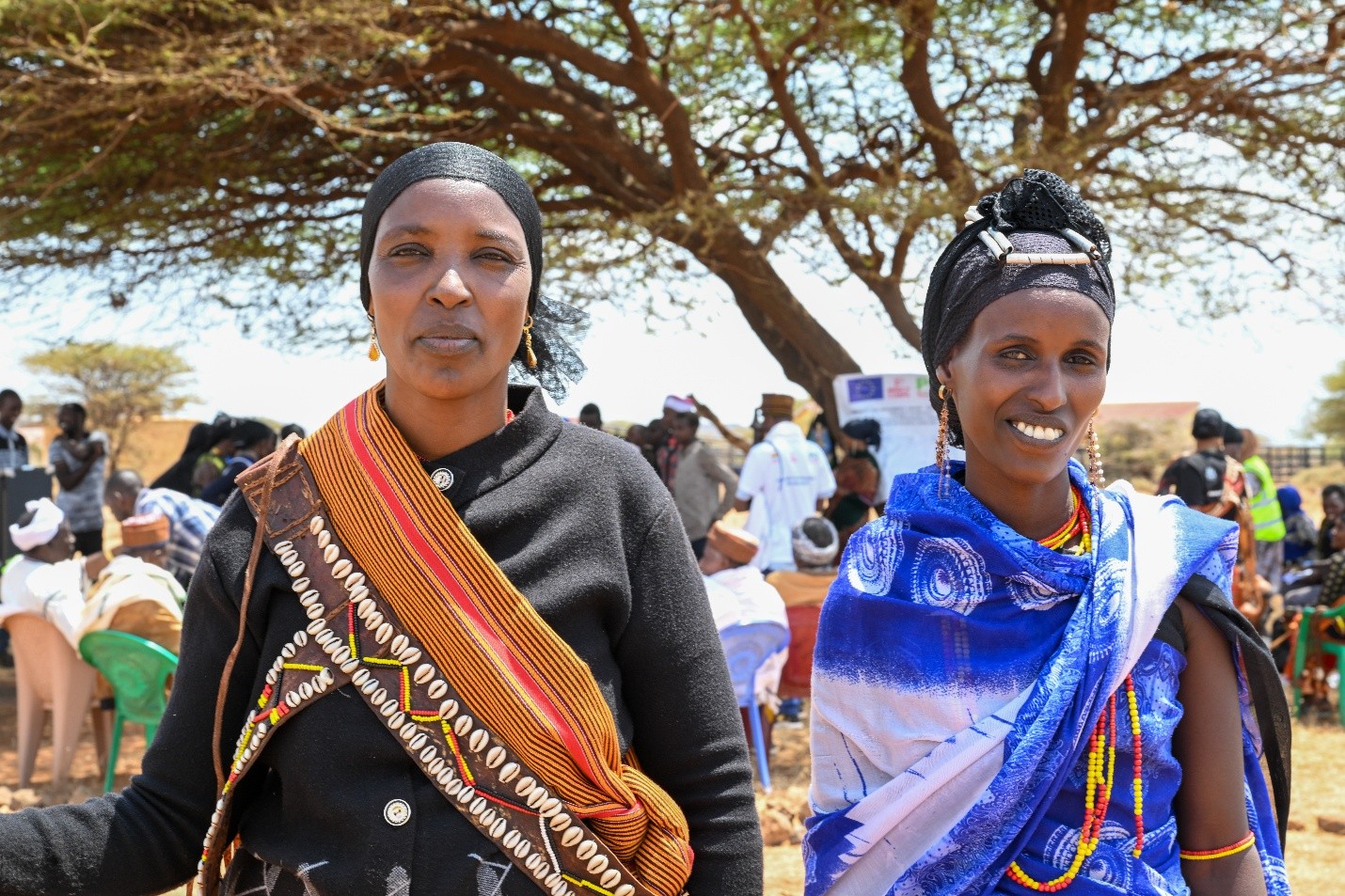
Women at the forefront of building social cohesion: Women from Borana and Gabbra communities during a Community Participatory Action Research (PAR) dialogue exchange in Forolle, Kenya, strengthening relationships and fostering peaceful coexistence across borderland communities.

Strategic work packages:

 01-Capacity and Learning
Commonly held understanding of political, economy, livelihoods, climate and conflict dynamics, enhanced ability to act on this understanding

02-Peace building and conflict transform
Mutually beneficial relationships across conflict lines, and infrastructures for peace built/strengthened to maintain these relationships

03-Resilient Livelihoods
Sustainable avenues for income generation and resource management and use that to strengthen peaceful coexistence and facilitate climate change adaption

04-Policy engagements
Local perspective and needs reflected in decision-making, communities shape policy processes, policy frameworks becoming more meaningful

M&M PILLARS

M&M is guided through the following three pillars: 

PILLAR 1: Conflict Transformation
Strengthening peace and social cohesion through inclusive dialogue, community-led peacebuilding, strengthened peace structures, and early warning and response mechanisms that prevent and mitigate conflict.
PILLAR 2: Resilient Livelihoods
Promoting sustainable and inclusive economic opportunities through livelihood diversification, skills development, savings groups, and cross-border trade initiatives that enhance resilience and reduce conflict drivers.
PILLAR 3: Natural Resource Management
Supporting community-led governance of shared natural resources through joint planning, sustainable resource use, environmental restoration, and cross-border cooperation over water, pasture, and rangelands.


The Mobility and Movement (M&M) Project is guided by a Systems Thinking and Triple Nexus (Humanitarian–Development–Peace) approach, recognizing that conflict, livelihoods, climate change, governance, and natural resource management are interconnected.


The Moyale Cluster serves as a strategic cross-border corridor linking Kenya and Ethiopia, where pastoral mobility, trade, and shared natural resources require coordinated governance and sustained collaboration. Under the Peaceful and Resilient Borderlands Programme (PRBP), GIZ has played a key coordination role, bringing together IGAD specialised institutions, national and county governments, implementing partners, and local communities to strengthen peacebuilding, climate resilience and cross-border governance.

Working in close collaboration with the Life & Peace Institute (LPI), CEWARN, ICPAC and ICPALD, GIZ has facilitated coordinated planning, technical support and institutional dialogue to strengthen local peace infrastructures while ensuring alignment with regional IGAD frameworks. This collaborative approach has promoted ownership, enhanced institutional coordination, and improved the sustainability of interventions across the Kenya–Ethiopia borderlands.

Output 1: Reinforced Cross-Border Coordination and Early Warning

  •  Coordinated Engagements

GIZ coordinated the implementation of cross-border peacebuilding and early warning interventions in partnership with CEWARN, LPI, county governments and Ethiopian regional authorities to strengthen institutional collaboration and preparedness.

Key engagements included:

    • Conducting capacity assessments of existing conflict prevention structures to identify institutional strengths and gaps.
    • Supporting the establishment and strengthening of Conflict Prevention and Resolution Mechanisms (CPRMs) to improve local conflict management and cross-border coordination.
    • Coordinating Multi-Hazard Early Warning System (MHEWS) training for technical officers to enhance risk monitoring, preparedness and response.
    • Facilitating Technical Working Group training on Transboundary Animal Diseases (TADs) in collaboration with ICPALD to strengthen disease surveillance and information sharing across borders. · Supporting the rollout and operationalization of the HUSIKA Early Warning Platform, enabling government institutions and local actors to improve risk monitoring, early warning dissemination and coordinated response.


  • Coordination Results

The coordinated interventions strengthened institutional collaboration and early warning systems by:

    • Enhancing cross-border collaboration between Kenyan and Ethiopian government institutions and technical agencies.
    • Building the capacity of 25 technical officers in Multi-Hazard Early Warning Systems (MHEWS) and Disaster Risk Management (DRM).
    • Supporting the generation and dissemination of one climate early warning alert, improving anticipatory action planning.
    • Strengthening preparedness, coordinated response mechanisms and information sharing across the cluster.
    • Improving institutional capacity for timely risk analysis, early warning dissemination and coordinated emergency response.


  •  LPI's Contribution

As the implementing partner, the Life & Peace Institute (LPI) complemented GIZ's coordination role by strengthening community-level peace infrastructures and fostering dialogue among border communities. LPI facilitated inclusive peacebuilding processes, supported community mediation initiatives, strengthened local conflict management mechanisms, and promoted meaningful participation of women, youth and traditional leaders in cross-border peace processes. This community-based engagement reinforced PRBP's broader objective of building resilient and locally owned conflict prevention systems.

Output 2: Strengthening Cross-Border Policy Coordination and Awareness

  • Coordinated Engagements

Working closely with IGAD ICPALD, county governments, veterinary departments and LPI, GIZ coordinated policy awareness and sensitization forums to strengthen institutional understanding of regional livestock health and cross-border cooperation frameworks.

The engagements focused on:

    • Transboundary Animal Health Memoranda of Understanding (MoUs).
    • Animal Health Information Sharing Protocols.
    • Roles and responsibilities of county governments and Ethiopian regional authorities in cross-border cooperation.


  • Coordination Results

The coordinated engagements resulted in:

    • Improved institutional awareness of regional animal health coordination frameworks.
    • Strengthened collaboration between veterinary authorities from Kenya and Ethiopia on disease surveillance and information sharing.
    • Increased stakeholder understanding of IGAD regional policy frameworks supporting cross-border pastoral mobility and livestock health.


Output 3: Coordinating Sustainable Transboundary Resource Management

  • Coordinated Engagements

Recognising the importance of shared natural resources to pastoral livelihoods, GIZ coordinated technical collaboration between ICPALD, county governments, Ethiopian authorities, implementing partners and community stakeholders to strengthen transboundary resource governance.

The coordinated process included:

    • Participation in consultations on shared rangeland governance and sustainable natural resource management.
    • Multi-stakeholder dialogue on resource-sharing arrangements and conflict-sensitive management approaches.
    • Contributions to the development of a transboundary resource management roadmap to guide future collaboration.


  • Coordination Results

The coordinated engagements contributed to:

    • Increased stakeholder ownership of future resource governance frameworks.
    • Strengthened dialogue on the sustainable management of shared rangelands, water resources and livestock corridors.
    • Improved collaboration among technical institutions, government agencies and local communities in addressing resource-related conflicts.


Output 4: Strengthening Cross-Border Governance and Coordination Architecture

  • Coordinated Engagements

GIZ facilitated the implementation of the PRBP governance and coordination architecture across the Moyale Cluster by convening government institutions, IGAD specialised entities, implementing partners and development actors through structured coordination platforms.

The cluster actively participated in:

    • Cluster Project Technical Coordination Committee (CPTCC) meetings.
    • Cluster Stakeholder Engagement Platform (CSEP) meetings.
    • Joint planning, coordination and harmonisation processes supporting implementation of the PRBP coordination architecture.
  • Coordination Results

The strengthened coordination mechanisms contributed to:

    •  Improved collaboration among government institutions, communities, IGAD entities and development partners.
    •  Enhanced joint planning, monitoring and learning across interventions in the cluster.
    •  Better integration of local priorities into regional planning and decision-making processes.
    •  Strengthened institutional coordination, promoting sustainable cross-border governance and resilience in the Kenya–Ethiopia borderlands.

Overall Coordination Impact

Through its coordination role in the Moyale Cluster, GIZ has strengthened collaboration between Kenya and Ethiopia by linking regional policy frameworks with community-led peacebuilding and resilience initiatives. By working closely with IGAD institutions, government agencies and the Life & Peace Institute, the programme has enhanced institutional coordination, improved early warning and anticipatory action systems, strengthened governance of shared natural resources, and fostered inclusive cross-border dialogue. This coordinated approach has created stronger foundations for sustainable peace, resilience and regional cooperation in the Moyale borderlands.
M&M PROJECT PRINCIPLES
Conflict Sensitivity
We recognize the interaction between our interventions and the local context, ensuring that project activities do not exacerbate tensions and instead contribute to peace and social cohesion.
Gender Transformation
We integrate gender considerations throughout the project, addressing barriers to inclusion and promoting equitable participation, leadership, and opportunities for women, men, girls, and boys.
Meaningful Participation
Communities are at the center of the project. Through participatory and inclusive processes, local actors actively shape, implement, monitor, and adapt interventions that affect their lives.
Policy Linkages
We connect local knowledge and experiences with policy processes, ensuring that community priorities inform decision-making at county, national, regional, and international levels.
Avenue Georges Clemenceau
Djibouti, Republic of Djibouti
P.O. Box: 2653
Email: prbpcoordiantion@igad.int
TEL: +251 21 33 02 12
Stay ahead of the curve with the latest news across the horn of Africa!
Subscription Form
Co-financed by the European Union and the German Federal Ministry for Economic Cooperation and Development (BMZ), and implemented by GIZ (Deutsche Gesellschaft für Internationale Zusammenarbeit) in partnership with IGAD.
Copyright © 2026 PRBP | IGAD, All Rights Reserved Privacy PolicyCookie Policy
menumenu-circle linkedin facebook pinterest youtube rss twitter instagram facebook-blank rss-blank linkedin-blank pinterest youtube twitter instagram