prbpcoordination@igad.int
SPREAD is funded by the European Union that has supported peace-initiatives and resilience building projects in the Horn of Africa region since 2016.
The aim is to address long-standing drivers of conflict, while improving the livelihoods of communities living close to the borders.
Working closely with DanChurchAid (DCA), IGAD specialised institutions, including CEWARN, ICPAC and ICPALD and government counterparts from Kenya and South Sudan, GIZ has ensured that interventions are strategically aligned, mutually reinforcing and contribute to long-term resilience in the borderlands.
Rather than implementing activities in isolation, there has been coordinated planning, technical guidance, knowledge exchange and joint implementation across the programme outputs. This collaborative approach has strengthened institutional ownership, reduced duplication of interventions, and created stronger linkages between peacebuilding, climate resilience, pastoral livelihoods and governance.
Output 1: Reinforced Cross-Border Coordination and Early Warning
GIZ coordinated the implementation of cross-border peacebuilding and early warning interventions through IGAD's Conflict Early Warning and Response Mechanism (CEWARN), working closely with DCA, county governments, national administrations and community peace structures.
Through this coordination:
· Existing Peace Committees and Conflict Prevention and Resolution Mechanisms (CPRMs) were jointly assessed in Lodwar, Lokichoggio, Todonyang and Narus (South Sudan).
· Thirty representatives from county governments, local administrations, security actors and community peace structures participated in the assessment and jointly identified institutional capacity gaps.
· Cross-border coordination structures were strengthened to improve information sharing and collaborative responses to emerging conflict risks.
· Multi-Hazard Early Warning System (MHEWS) Technical Working Groups were trained through collaboration with IGAD's ICPAC to strengthen preparedness and anticipatory action.
· Technical officers from the cluster participated in regional capacity-building on Transboundary Animal Diseases (TADs), coordinated by ICPALD, to improve cross-border surveillance and information exchange.
· GIZ also facilitated the rollout of the HUSIKA Early Warning Platform, bringing together government institutions, technical agencies and local actors to strengthen digital early warning, coordinated information sharing and timely response across borders.
The coordinated approach significantly strengthened regional collaboration and institutional effectiveness by:
· Providing a comprehensive assessment of existing Peace Committees and CPRMs, informing a roadmap for their formal reconstitution and strengthening.
· Establishing stronger coordination between county governments, IGAD institutions and community peace structures for conflict prevention and response.
· Supporting the Karamoja Cluster's contribution to six PRBP cross-border coordination meetings that enhanced joint planning and regional cooperation.
· Enabling the dissemination of climate early warning information to support anticipatory action within the cluster.
· Building the capacity of 25 technical officers in Multi-Hazard Early Warning Systems and Disaster Risk Management, enhancing institutional coordination for risk monitoring, early warning dissemination and coordinated response.
The comparative advantage lay in convening diverse actors around a common resilience agenda. By bringing together IGAD institutions, implementing partners, government agencies and community structures, GIZ ensured that peacebuilding, climate resilience and pastoral development interventions complemented each other rather than operating as standalone initiatives.
The partnership with DCA further strengthened community ownership by linking local peacebuilding efforts with regional policy processes, enabling lessons from community interventions to inform broader cross-border coordination mechanisms.
Output 2: Strengthening Cross-Border Policy Coordination and Awareness
Working jointly with IGAD ICPALD, county veterinary departments and DCA, GIZ coordinated awareness and policy dialogue sessions aimed at strengthening cross-border cooperation on livestock health and mobility.
The engagements focused on:
· Transboundary Animal Health Memoranda of Understanding (MoUs).
· Animal Health Information Sharing Protocols.
· Cross-border cooperation frameworks supporting pastoral mobility and coordinated disease control.
The forums brought together veterinary officers, county governments, local authorities, border agencies and community representatives to promote a common understanding of regional policy frameworks.
The coordinated engagements resulted in:
· Improved understanding of regional animal health coordination frameworks among border institutions.
· Stronger collaboration between veterinary authorities across borders on information sharing and disease surveillance.
· Increased awareness of cross-border policy frameworks, contributing to programme-wide progress in stakeholder awareness from a baseline of 10% to 72%.
Output 3: Coordinating Sustainable Transboundary Resource Management
Recognising that competition over natural resources remains a key driver of conflict, GIZ coordinated technical collaboration between ICPALD, county governments, implementing partners and local stakeholders to strengthen transboundary resource governance.
The coordinated process included:
· Joint gap analyses on transboundary natural resource governance.
· Multi-stakeholder consultations on shared resource management.
· Development of a roadmap for strengthening governance of shared rangelands, water resources and livestock corridors.
The coordinated engagement established a stronger foundation for future regional cooperation by:
· Building consensus among stakeholders on priority resource governance challenges.
· Strengthening collaboration between technical institutions and local actors.
· Providing evidence to inform future agreements on sustainable management of shared natural resources.
Output 4: Strengthening Cross-Border Governance and Coordination Architecture
Coordinated Engagements
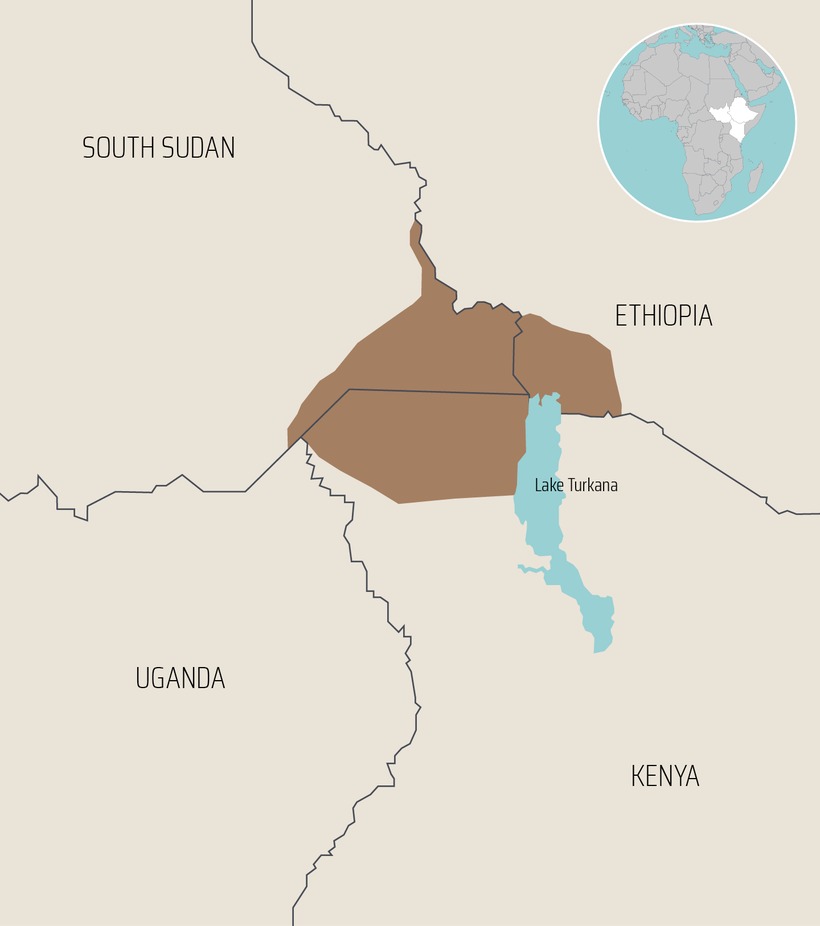
GIZ played a central coordination role in operationalising the PRBP governance architecture across the Karamoja Cluster by convening government institutions, IGAD specialised entities, development partners and implementing organisations through structured coordination platforms.
The cluster actively participated in:
· Cluster Project Technical Coordination Committee (CPTCC) meetings.
· Cluster Stakeholder Engagement Platform (CSEP) meetings.
· Joint planning and harmonisation workshops involving IGAD, the European Union, GIZ and implementing partners.
These platforms enabled coordinated planning, technical oversight, knowledge sharing and alignment of interventions across sectors.
The strengthened coordination architecture contributed to:
· Operationalisation of the PRBP three-tier governance and coordination structure.
· Improved collaboration among government institutions, IGAD entities, implementing partners and development actors.
· Better alignment of peacebuilding, resilience and pastoral development interventions across the cluster.
· Enhanced joint planning, monitoring and learning, improving the sustainability and collective impact of interventions in the Karamoja borderlands.
Overall Coordination Impact
Through its coordination role, GIZ has gone beyond project implementation to strengthen the systems that enable sustainable cross-border cooperation. By convening regional institutions, governments, implementing partners such as DCA and local communities, the programme has fostered stronger institutional collaboration, improved policy coherence and enhanced the collective ability of stakeholders to address conflict, climate risks and shared resource challenges in the Karamoja Cluster. This coordinated approach has laid a stronger foundation for long-term resilience, ensuring that investments made by different actors contribute to shared regional outcomes rather than fragmented interventions.
SPREAD is funded by the European Union that has supported peace-initiatives and resilience building projects in the Horn of Africa region since 2016.
The aim is to address long-standing drivers of conflict, while improving the livelihoods of communities living close to the borders.