
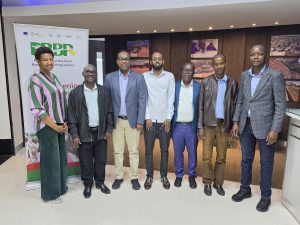
Nairobi, Kenya – 03 July 2026: Strengthened cross-border coordination, improved conflict prevention systems, enhanced use of early warning and anticipatory action tools, as well as stronger partnerships among communities, governments, and development actors are among the key expected outcomes of a newly inducted team of Cross-Border Development Facilitation Unit (CBDFU) Coordinators.
The coordinators were inducted under the IGAD Drought Disaster Resilience and Sustainability Initiative (IDDRSI) with support from the European Union through GIZ’s Regional Transformation Cluster, Peaceful and Resilient Borderlands Programme (PRBP). The coordinators will serve across the Karamoja, Mandera and Moyale clusters spanning the borders of Kenya, Uganda, Ethiopia and Somalia. Their role will be to strengthen collaboration among communities, local authorities, technical institutions and development partners while supporting conflict prevention, resilience building and cross-border development initiatives.
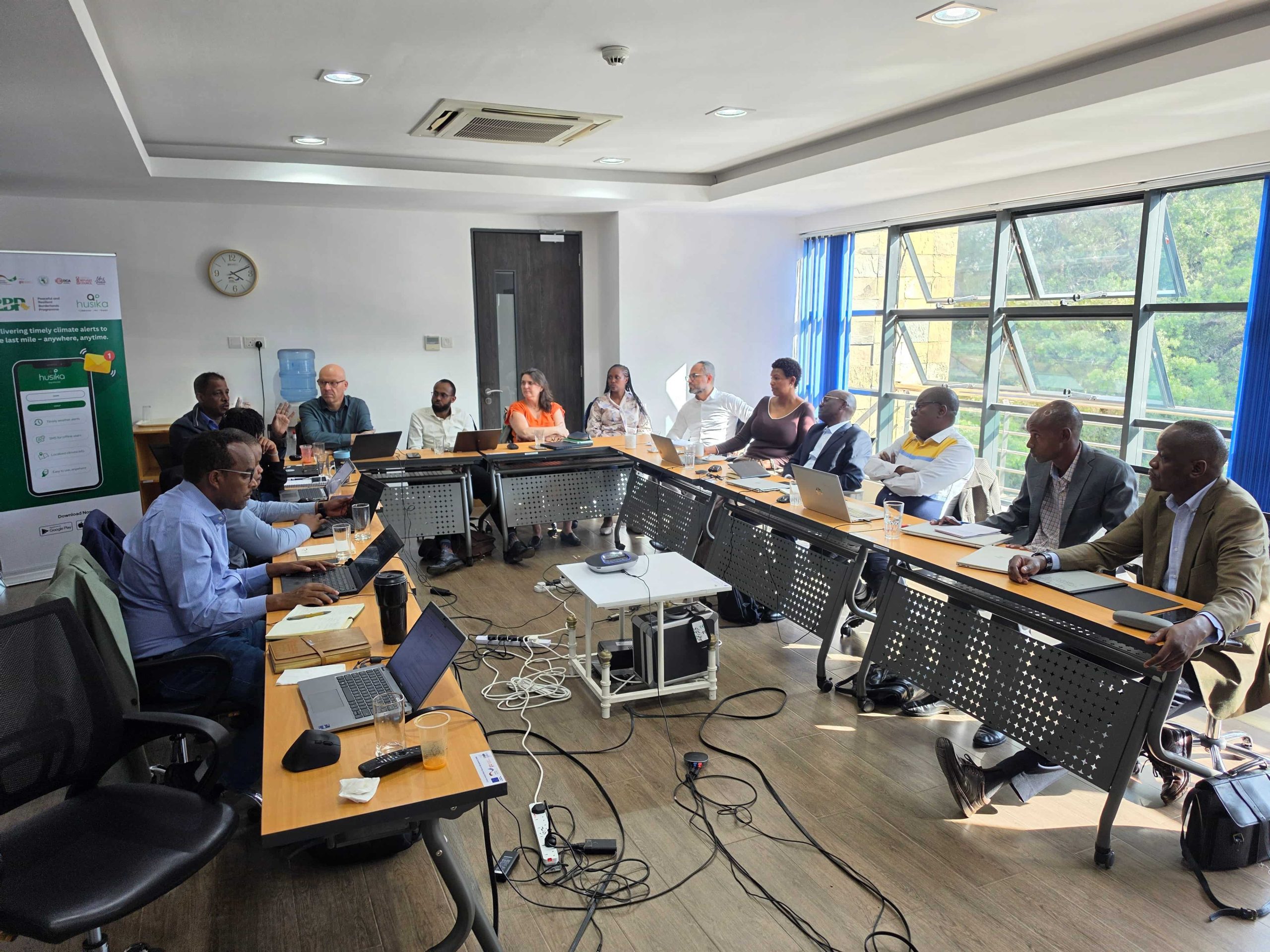
To prepare them for this responsibility, the Intergovernmental Authority on Development (IGAD), through its specialized institutions and partners, convened a five-day induction programme bringing together representatives from IDDRSI, CEWARN, ICPAC, and ICPALD, alongside development partner GIZ and implementing partners Danish Church Aid (DCA), Danish Refugee Council (DRC) and Life & Peace Institute (LPI). The induction was also attended by representatives from the Food and Agriculture Organization of the United Nations (FAO) and the European Union Delegation to Kenya, reaffirming their commitment to supporting integrated approaches to peacebuilding, resilience, climate adaptation, livestock development and sustainable cross-border governance across the three clusters.
Opening the induction, Mubarak Mabuya, IGAD's IDDRSI Platform Coordinator, underscored the importance of borderlands as engines of regional integration and development. "Borderlands are not peripheral spaces; they are centres of opportunity, trade, cultural exchange and regional integration. The CBDFU framework strengthens our ability to coordinate development and peacebuilding efforts across borders while ensuring that communities remain at the centre of decision-making. Through this initiative, IGAD is strengthening local ownership of resilience and creating stronger linkages between regional policies and community action," he said.
The induction equipped coordinators with knowledge and practical tools on cross-border conflict prevention and management, oversight of Technical Working Groups, early warning and anticipatory action systems, transboundary animal health coordination, communications, visibility and stakeholder engagement. The CBDFU serves as a critical cross-border coordination mechanism within the PRBP architecture. As frontline facilitators, the coordinators will help translate regional frameworks into local action by strengthening collaboration between governments, communities and development partners and ensuring that community priorities inform cross-border programming.
According to Katharina Hübner, GIZ Regional Transformation Cluster Manager, the initiative lays out the foundation for a new generation of cross-border practitioners capable of connecting peacebuilding with sustainable development outcomes. "The complexity of borderland challenges requires coordinated and innovative approaches. Through the CBDFU structure, we are investing in people and institutions that can bring together governments, communities, technical experts and development partners around shared solutions. We expect the coordinators to become catalysts for collaboration, learning and long-term resilience across the programme clusters," she said.
A key feature of the induction was learning from the successful Moyale Conflict Prevention and Resolution Mechanism (CPMR), which has emerged as a model for community-led cross-border peacebuilding in the IGAD region. Supported by IGAD CEWARN, GIZ and local partners, the Moyale peace structure brought together previously fragmented peace initiatives into a unified platform that strengthened cooperation between communities and authorities on both sides of the Kenya-Ethiopia border. The mechanism has successfully mediated inter-community disputes, facilitated the recovery of stolen property across borders, reduced tensions around contested resources, and strengthened trust in local conflict management structures.
Reflecting on the model's success, Dr Bedru Muzein, the Project Component Manager, Cross Border Cooperation at GIZ, who played a leading role in the design and operationalization of both the CPMR and CBDFU approaches under the Strengthening IGAD’s Migration Policy Implementation Project (SIMPI) programme, highlighted the value of institutionalizing local peace structures. "The CPMR model demonstrated that when communities, governments and regional institutions come together under a coordinated framework, they can effectively address the root causes of conflict and build lasting peace. The CBDFU model builds on this success by ensuring that peace, development and resilience interventions are coordinated, inclusive and sustainable," he noted.
Lessons from Moyale will guide the establishment and strengthening of similar Conflict Prevention, Management and Resolution platforms in Karamoja and Mandera, adapted to each cluster's unique conflict dynamics, climate risks and development challenges. For Galma Dida, CBDFU Coordinator for the Moyale Cluster, the training offered an opportunity to share lessons from a region where collaborative peacebuilding is already yielding results. "Moyale has shown that communities can become the first line of defense against conflict when they are empowered, organized and supported. The CBDFU will strengthen these connections further by improving coordination among local peace structures, government institutions and development actors," he said.
Participants also explored how climate information, early warning systems, anticipatory action, and transboundary animal disease surveillance can be integrated into local planning and decision-making processes. Speaking on behalf of the Karamoja Cluster, Dr Gerald Kairu noted that the induction provided practical tools for addressing shared challenges across the Kenya-Uganda border. "Karamoja experiences interconnected challenges that cannot be addressed by one country or one institution alone. This induction has equipped us with practical tools and regional experiences that will help strengthen cross-border coordination and promote community-driven solutions for peace and resilience," he said.
Similarly, Omar Siraji, CBDFU Coordinator for the Mandera Cluster, emphasized the importance of partnerships in a region where security, mobility, and development issues are cut across borders. "Through the CBDFU approach, we have an opportunity to strengthen trust among communities, improve collaboration between institutions and support initiatives that promote stability, livelihoods and social cohesion across the Kenya-Ethiopia-Somalia borderlands," he said.
Participants welcomed the engagement of FAO and the European Union Delegation to Kenya, whose support is expected to strengthen the work of the CBDFUs through enhanced technical collaboration, policy engagement and investments in resilience-building initiatives. FAO's expertise in livestock systems, transboundary animal disease management and sustainable natural resource management, alongside the European Union's longstanding support for regional integration, peacebuilding and resilience programming in the Horn of Africa, will be instrumental in helping the coordinators translate regional frameworks into tangible benefits for communities across Karamoja, Mandera and Moyale.
As the Peaceful and Resilient Borderlands Programme advances implementation across the three clusters, the newly inducted coordinators are expected to strengthen Technical Working Groups, support operationalization of cross-border governance structures, facilitate community engagement and ensure that local voices inform regional decision-making.
The induction reaffirmed the commitment of IGAD, GIZ, DCA, DRC, LPI, member states and local stakeholders to transform borderlands from areas often associated with vulnerability and conflict into spaces of cooperation, resilience, opportunity and sustainable development.