prbpcoordination@igad.int
Mandera/Somali Triangle Cluster

Building Opportunities for Resilience in the horn of Africa  (BORESHA-NABAD)

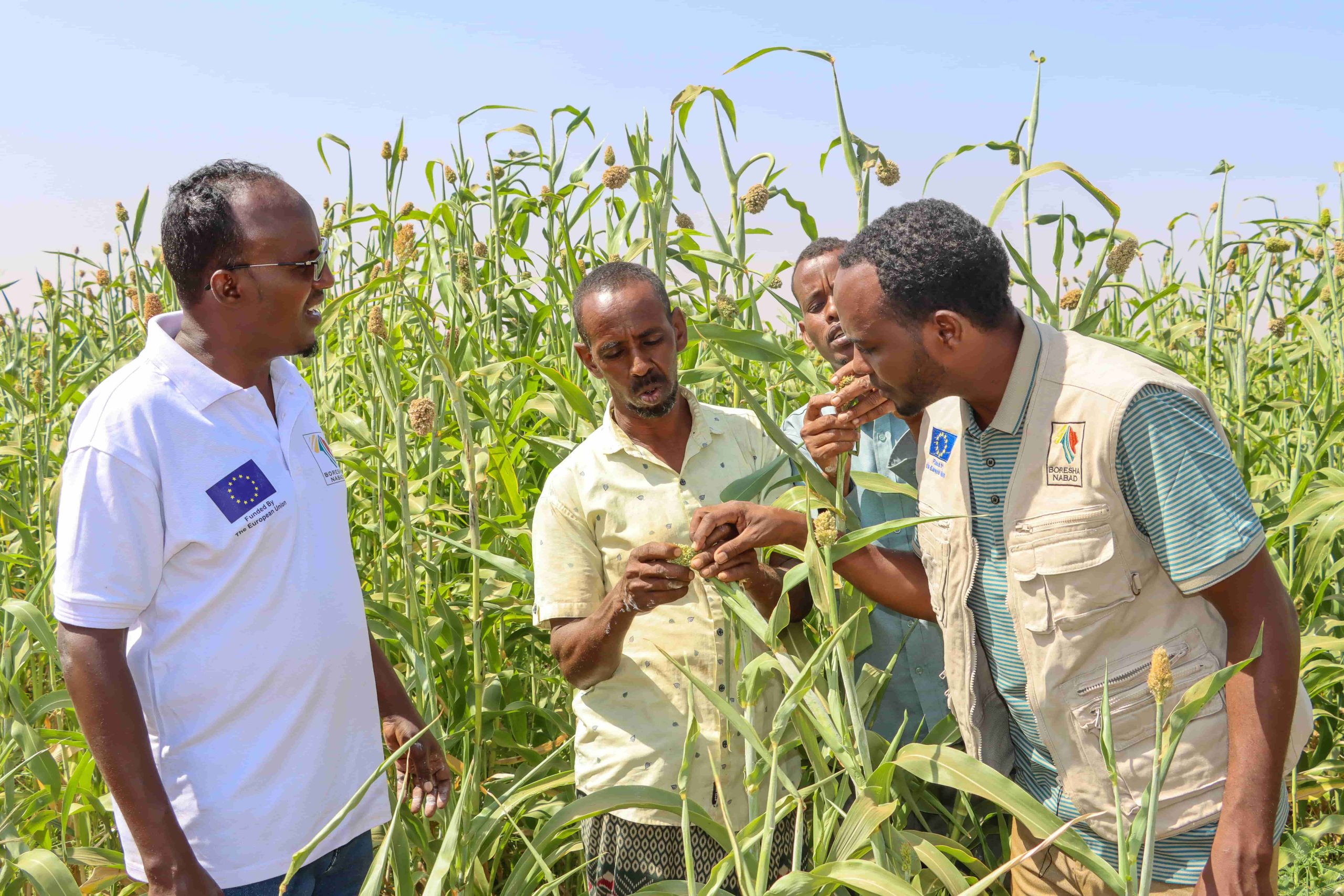
BORESHA-NABAD is a three-year integrated resilience programme funded by the European Union, with co-funding from Danida. It is implemented by the Danish Refugee Council in partnership with RACIDA, VOPA and Mandera Women for Peace and Development.

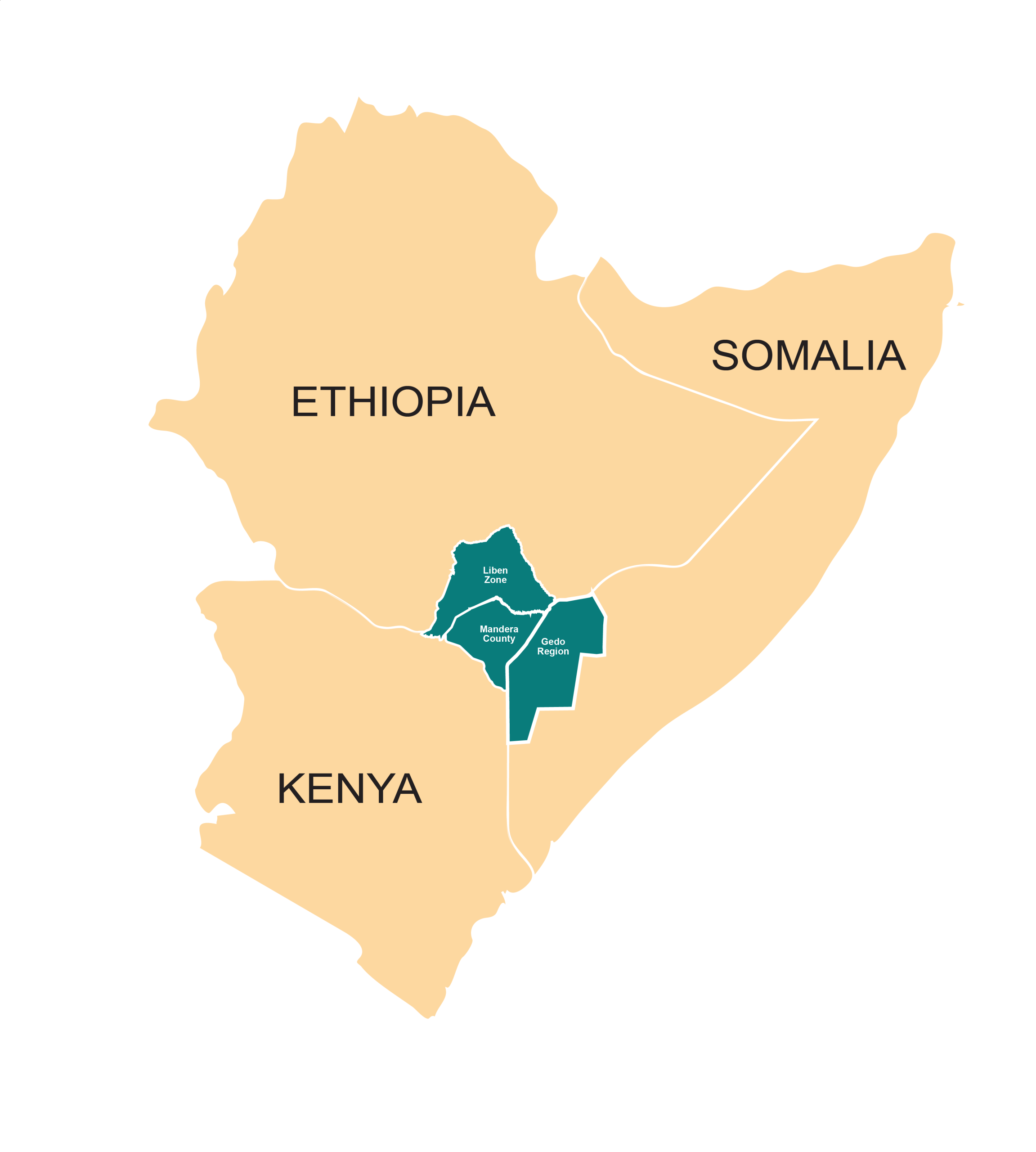
Working across the Mandera Triangle borderlands of Kenya, Somalia and Ethiopia, BORESHA-NABAD builds on earlier BORESHA phases to address the interconnected challenges of conflict, climate shocks, limited services and economic fragility. The programme contributes to the EU’s broader Peaceful and Resilient Borderlands Programme in the Horn of Africa.

The programme works with communities, local authorities, private sector actors, peace structures, financial service providers, women and youth groups, and cross-border institutions to strengthen the systems that enable peaceful coexistence, climate-resilient livelihoods and inclusive economic opportunity.

Overall Objective
Stakeholders in the Mandera Triangle are empowered to enable peaceful coexistence and sustainable, climate-resilient livelihoods.
BORESHA NABAD
Empowering communities and local stakeholders to advance peaceful coexistent and climate resilient livelihoods.
Key Outcome Areas:
BORESHA-NABAD delivers its integrated resilience approach through four interconnected intervention areas that strengthen the systems underpinning livelihoods, climate resilience, peace, and economic development across the Mandera Triangle. Together, these investments address immediate vulnerabilities while building the capacity of communities, institutions, and markets to adapt, recover, and thrive in the face of recurring shocks and stresses.

Duration: February 2024 – February 2027.
Total funding: EUR 15.56 million.
Donor: European Union, with co-funding from Danida. 
Lead agency: Danish Refugee Council.
Consortium partners: RACIDA, VOPA and Mandera Women for Peace and Development.
Geographic focus: Borderland areas of Kenya, Somalia and Ethiopia.

Specific Programme Target Clusters:
  • Cluster 1: Lafey – Elwak – Ceelwaq
  • Cluster 2: Mandera – Beled-Hawa – Dollow – Dollo Ado
  • Cluster 3: Rhamu – Sadey
  • Cluster 4: Banisa – El-Mole – Malkamari

The Mandera Triangle is one of the Horn of Africa's most complex cross-border regions, where recurrent conflict, climate shocks, pastoral mobility and humanitarian challenges require coordinated responses across Kenya, Ethiopia and Somalia. Under the Peaceful and Resilient Borderlands Programme (PRBP), GIZ has played a strategic coordination role, convening IGAD institutions, national and county governments, implementing partners and community actors to strengthen cross-border governance, peacebuilding and resilience.

Working closely with the Danish Refugee Council (DRC), IGAD specialised institutions, including CEWARN, ICPAC and ICPALD and government counterparts from the three countries, GIZ has coordinated interventions that link community-level resilience initiatives with regional policy and governance frameworks. Through joint planning, technical coordination and structured dialogue platforms, the programme has strengthened institutional collaboration, enhanced ownership of cross-border processes and laid the foundation for sustainable peace and resilience in the Mandera Triangle.

Output 1: Reinforced Cross-Border Coordination and Early Warning

  • Coordinated Engagements

Unlike the Karamoja and Moyale clusters, where existing peace structures were strengthened, GIZ coordinated efforts in the Mandera Cluster to establish new cross-border coordination mechanisms capable of addressing emerging conflict and climate-related risks.

Working through CEWARN, ICPAC, DRC and government institutions from Kenya, Ethiopia and Somalia, the programme facilitated:

    • Establishment and operationalization of Conflict Prevention and Resolution Mechanisms (CPRMs) across the cluster.
    • Formation of cross-border coordination structures to strengthen collaboration between government institutions and local peace actors.
    • Capacity building for Multi-Hazard Early Warning Systems (MHEWS) to improve institutional preparedness and anticipatory action.
    • Participation of Technical Working Groups in regional training on Transboundary Animal Diseases (TADs) coordinated by ICPALD to strengthen disease surveillance and cross-border information sharing.

    • Rollout and operationalization of the HUSIKA Early Warning Platform, enhancing digital early warning, coordinated risk analysis and timely dissemination of information among institutions across the three countries.

  • Coordination Results

The coordinated interventions strengthened institutional collaboration across the Mandera Triangle by:

    • Supporting the establishment of new Conflict Prevention and Resolution Mechanisms to strengthen local peace infrastructure.
    • Enhancing coordination among government authorities and technical institutions from Kenya, Ethiopia and Somalia.
    • Building the capacity of 26 technical officers in Multi-Hazard Early Warning Systems (MHEWS) and Disaster Risk Management (DRM).
    • Supporting the generation and dissemination of one climate early warning alert, improving anticipatory action and preparedness.
    • Strengthening coordinated risk monitoring, information sharing and response mechanisms for conflict and climate-related risks across the cluster.


  • DRC's Contribution

As the implementing partner, the Danish Refugee Council (DRC) complemented GIZ's coordination role by strengthening community resilience and facilitating inclusive engagement with vulnerable border communities. Leveraging its extensive humanitarian and resilience programming experience in the Mandera Triangle, DRC supported community stabilization initiatives, strengthened community-based conflict prevention mechanisms, facilitated cross-border dialogue, and enhanced participation of local stakeholders in governance and peacebuilding processes. These efforts ensured that community perspectives informed regional coordination mechanisms while strengthening local ownership of peace and resilience interventions.

Through its broader presence in the region and collaboration with partners including the Church of Sweden, UNDP, Swedish Mission Council, Chemonics, DT Global, UN Peacebuilding Fund (UNPBF), Somalia Stability Fund, Peace Incentive Fund, Sida, the Embassy of the Netherlands, the Robert Bosch Foundation and the Carnegie Corporation, DRC also contributed to improved complementarity and coordination among development, humanitarian and peacebuilding actors operating in the Mandera Triangle.

Output 2: Strengthening Cross-Border Policy Coordination and Awareness

  • Coordinated Engagements

Working with IGAD ICPALD, veterinary authorities and county governments from the three countries, GIZ coordinated policy awareness and sensitization forums aimed at strengthening regional cooperation on livestock health and pastoral mobility.

The engagements focused on:

    • Animal Health Information Sharing Protocols.
    • Cross-border veterinary cooperation frameworks.
    • Regional approaches to livestock disease surveillance and management.


  • Coordination Results

The coordinated engagements contributed to:

    • Increased awareness among county governments, border authorities and technical institutions on regional animal health frameworks
    • Improved readiness for coordinated animal disease surveillance, reporting and response.
    • Strengthened institutional collaboration among veterinary authorities from Kenya, Ethiopia and Somalia.


Output 3: Coordinating Sustainable Transboundary Resource Management

  • Coordinated Engagements

Recognising that competition over shared natural resources remains a major driver of conflict in the Mandera Triangle, GIZ coordinated technical collaboration between ICPALD, government institutions, DRC and local stakeholders to strengthen transboundary resource governance.

The coordinated process included:

    • Multi-stakeholder consultations on sustainable management of shared rangelands, water resources and livestock corridors.
    • Joint discussions on conflict-sensitive approaches to natural resource governance.
    • Contributions to the development of regional roadmaps for transboundary resource management.


  •  Coordination Results

The coordinated engagements resulted in:

    • Enhanced stakeholder participation in dialogue on resource-related conflict prevention.
    • Stronger collaboration among technical institutions, government agencies and community actors.
    • A solid foundation for future formalized agreements on the sustainable governance of shared natural resources across the Mandera Triangle.


Output 4: Strengthening Cross-Border Governance and Coordination Architecture

  • Coordinated Engagements

GIZ coordinated implementation of the PRBP governance framework in the Mandera Cluster by bringing together government institutions, IGAD specialised entities, implementing partners and development actors through structured coordination platforms.

The cluster actively participated in:

    • Cluster Project Technical Coordination Committee (CPTCC) meetings.
    • Cluster Stakeholder Engagement Platform (CSEP) meetings.
    • Joint harmonization and planning workshops that aligned interventions across the three countries.

These platforms promoted collective planning, technical coordination, monitoring and knowledge sharing among stakeholders.


  • Coordination Results

The strengthened governance architecture contributed to:

    • Improved alignment of interventions among local, national and regional institutions.
    • Strengthened implementation oversight and coordination across the Mandera Triangle.
    • Enhanced knowledge sharing, joint planning and collective action among government agencies, IGAD institutions, implementing partners and development actors.
    • Increased institutional ownership and sustainability of cross-border governance and resilience initiatives.

Overall Coordination Impact in Mandera Cluster

Through its coordination role in the Mandera Triangle, GIZ has strengthened collaboration among Kenya, Ethiopia and Somalia by creating structured platforms for joint planning, policy dialogue and coordinated action. By working alongside IGAD institutions, government authorities and the Danish Refugee Council, the programme has established

new cross-border coordination mechanisms, strengthened early warning and anticipatory action systems, improved governance of shared natural resources, and fostered stronger institutional partnerships. This coordinated approach has enhanced the collective capacity of regional and local actors to address conflict, climate risks and pastoral mobility challenges, laying a stronger foundation for sustainable peace, resilience and cross-border cooperation across the Mandera Triangle.
Contact
BORESHA-NABAD Consortium
Danish Refugee Council – East Africa and Great Lakes
Lower Kabete Road, Ngecha Junction
P.O. Box 14762-00800, Nairobi, Kenya
Website: boreshahoa.org
Contact person: Yussuf Mohamed Abdullahi
Chief of Party
Yussuf.abdullahi@drc.ngo
Avenue Georges Clemenceau
Djibouti, Republic of Djibouti
P.O. Box: 2653
Email: prbpcoordiantion@igad.int
TEL: +251 21 33 02 12
Stay ahead of the curve with the latest news across the horn of Africa!
Subscription Form
Co-financed by the European Union and the German Federal Ministry for Economic Cooperation and Development (BMZ), and implemented by GIZ (Deutsche Gesellschaft für Internationale Zusammenarbeit) in partnership with IGAD.
Copyright © 2026 PRBP | IGAD, All Rights Reserved Privacy PolicyCookie Policy
menumenu-circle linkedin facebook pinterest youtube rss twitter instagram facebook-blank rss-blank linkedin-blank pinterest youtube twitter instagram