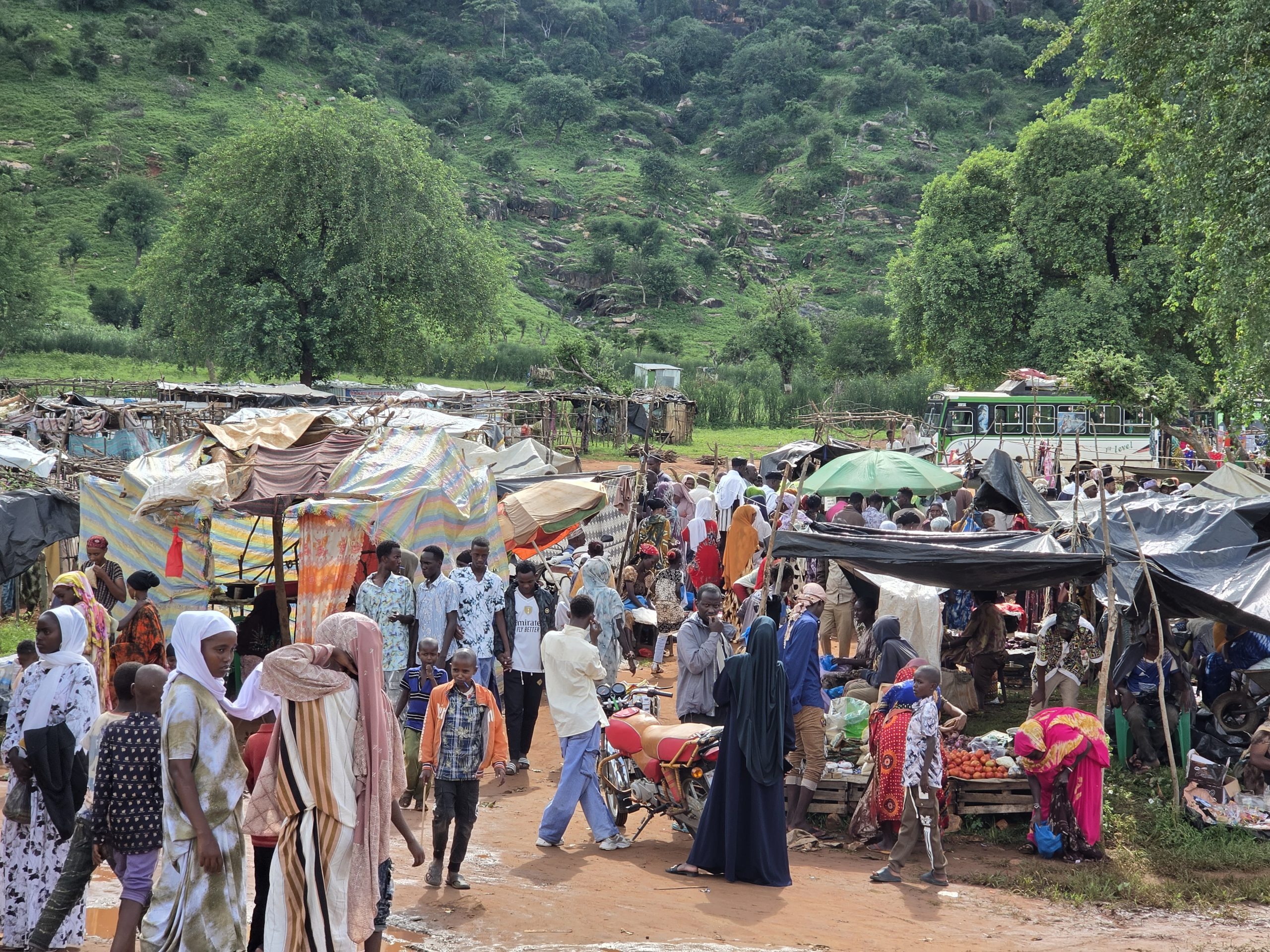
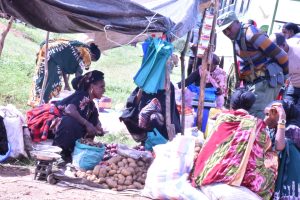
At sunrise in Dukana, the mudy border between Ethiopia and Kenya slowly comes alive. Women arrange grains and handmade goods under makeshift stalls, greeting customers in a mix of Borana, Amharic, and Swahili. There is no tension here, only trade, laughter, and quiet determination.
For many like Halima Guyo, a cross-border trader from Moyale, this scene was once unimaginable. “Before, we feared crossing,” she says. “There were conflicts, and we didn’t know who to trust. Today, I sell my goods on both sides. I earn more, and my children go to school.” Halima’s story reflects a broader transformation taking place along the Ethiopia–Kenya border, one shaped by deliberate cooperation between communities, governments, and regional institutions under the African Union Commission (AUC) and Intergovernmental Authority on Development (IGAD) Joint Action Plan on border governance.
From Fragile Borders to Shared Opportunities
For years, the Moyale borderlands were marked by recurring conflict, limited coordination between authorities, and weak peace structures. However, through the efforts of the African Union Commission (AUC), IGAD’s Conflict Early Warning and Response Mechanism (CEWARN), and support from GIZ and other partners, a new approach has taken root—one that views borders not as dividing lines, but as shared spaces of opportunity. Central to this transformation are the Cross-Border Peace Committees and the Conflict Prevention, Management and Resolution (CPMR) platforms. Bringing together community leaders, government representatives, and civil society actors from both Kenya and Ethiopia, these platforms have become the backbone of local peacebuilding efforts. “We have moved from reacting to conflict, to preventing it,” explains Edward Goko, Deputy County Commissioner on the Moyale-Kenya side. “Through regular dialogue and joint planning, we address issues before they escalate,” he noted. The impact is already visible: cross-border tensions have reduced, coordination between Ethiopian and Kenyan authorities has improved, and joint initiatives such as the Dukale cross-border market are fostering economic interdependence and strengthening peaceful coexistence.
Strengthening cross-border coordination.
Working closely with IGAD-CEWARN, the African Union Border Programme (AUBP), and national and local authorities, GIZ, through the Strengthening IGAD Migration Policy Implementation II (SIMPI II) and Strengthening IGAD’s Capacity to Increase Resilience in the Horn of Africa (SCIDA III) programmes, has supported the operationalization of Cross-Border Facilitation Units (CBDFUs) as coordination hubs along the Ethiopia–Kenya border. These hubs have created a shared framework that brings together government actors, CPMR platforms, civil society organizations, and development partners to strengthen cross-border cooperation and coordination.
The establishment of the CBDFUs has significantly reduced fragmentation among stakeholders by aligning priorities and ensuring that cross-border initiatives are implemented as part of a coherent regional strategy rather than in isolation. The approach has encouraged joint planning, collaboration, and collective learning among actors operating across the borderlands. “Stakeholders’ inclusion has helped us sit at one table,” notes Dida Galma, an IGAD CBDFU official in Moyale. “Before, actors worked in parallel. Now, we plan together, implement together, and learn together.”
Through the Peaceful and Resilient Borderlands Programme (PRBP), GIZ has further provided technical support to strengthen the capacity of CPMR platforms, facilitate structured dialogue among the Moyale, Mandera, and Karamoja clusters, and connect local peacebuilding initiatives to regional policy frameworks such as the Niamey Convention. This support has enhanced collaboration across different governance levels while reinforcing mechanisms for conflict prevention, peacebuilding, and resilience.
This multi-level coordination approach, linking community voices to regional decision-making processes, has been instrumental in translating policy into practical action on the ground. By fostering stronger institutional linkages and inclusive cooperation, the programme has helped build more sustainable systems for cross-border governance and peacebuilding. “Our role is to connect the dots between communities, governments, and regional institutions, so that cooperation becomes systematic, inclusive, and sustainable, while offering technical support to the programmes,” noted Dr. Bedru Muzein, GIZ’s Head of Component.
Peace Restored in Sololo–Miyo: From Conflict to Coexistence.
The impact of sustained peacebuilding efforts is equally evident along the Sololo–Miyo border, a region that endured more than 35 years of intermittent conflict between communities in Ethiopia and Kenya. For decades, insecurity disrupted livelihoods, weakened social cohesion, and fractured cross-border relations, while key economic hubs such as the Dukane market struggled to function due to recurring clashes and deep-rooted mistrust. Today, however, that narrative is gradually changing. Through strengthened cross-border cooperation, revitalized CPMR platforms, and community-led peace structures supported by IGAD, the African Union Commission (AUC), and development partners, Sololo–Miyo is experiencing a renewed period of peaceful coexistence and collaboration.
The reopening and steady operation of the Dukane market has become a powerful symbol of restored trust, resilience, and economic recovery in the borderlands. Communities that once viewed one another with suspicion are now trading, interacting, and rebuilding shared livelihoods across the border. Reflecting on this transformation, Mr. Dabassa Dambi, Chairperson of the Cross-Border Committee from Sololo, noted: “We have seen what conflict does, it takes everything. Now we choose peace, because we see what it brings back.”
Learning Across Borders: From West Africa to East Africa.
A turning point came in April 2025, when representatives from Moyale and Sololo travelled to the Mali–Guinea border to learn from well-established cross-border cooperation models in West Africa. The exchange visit exposed participants to functioning systems of joint development planning, shared financing mechanisms, and locally driven governance structures that have strengthened peace and cooperation across borders. “The experience in West Africa showed us what is possible when communities are at the centre,” said Calmus Omogo, Director for IGAD CEWARN. “We saw functioning joint development plans, shared financing mechanisms, and strong local ownership.”
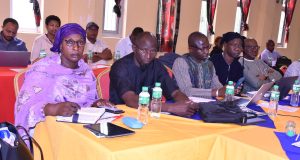
Back in Moyale, these lessons are already being adapted to the local context. Cooperation among stakeholders has strengthened, and there is growing momentum to institutionalize frameworks similar to West Africa’s Local Cross-Border Cooperation Groupings. According to AUBP representative Daniel Azene, “The Niamey Convention provides the legal foundation, but it is through initiatives like this that we see it come to life through people, partnerships, and practical action.”
Women at the Heart of Peace and Prosperity.
One of the most significant outcomes of the initiative has been the empowerment of women engaged in cross-border trade through the Building Foundations for Sustainable Peace (BFSP) approach implemented by Strategies for Northern Development (SND) Organization. In Moyale, informal women traders, who were once marginalized and highly vulnerable to insecurity and economic instability, are now increasingly organized into groups, trained, and supported to strengthen and expand their businesses across the border. The initiative has also created stronger networks of collaboration and mutual support among women traders, enabling them to share information, collectively address challenges, and contribute to peaceful coexistence within their communities.
“Before, we worked alone,” says Fatuma Wario, a local trader. “Now, we are part of a group. We share information, support each other, and even resolve disputes peacefully.”
Through these daily cross-border interactions, women are not only improving their livelihoods but are also helping to build trust, strengthen social cohesion, and reinforce local resilience. Through the BFSP approach, women have become active agents of peace rather than simply beneficiaries of assistance. Their growing economic participation is contributing to stability within households and communities while supporting broader peacebuilding efforts across the borderlands. Reflecting on the programme’s impact, Dida Ali, Executive Director of SND, noted: “Economic resilience is peacebuilding. When women can trade safely and earn a living, they stabilize families and communities. Ours is to confront the crisis, build resilience and transform lives.”
Challenges on the Path to Integration.
Despite these notable successes, several challenges continue to affect the effectiveness and sustainability of cross-border cooperation structures. Limited institutional capacity, resource constraints, and gaps in awareness remain key obstacles, with some peace committees still lacking the technical skills and operational support needed to fully execute their mandates. Coordination between national and local levels also requires further strengthening to ensure more consistent implementation and oversight. In addition, stakeholders continue to call for clearer legal frameworks and stronger government ownership, particularly through the ratification and domestication of the Niamey Convention. “We have made progress, but sustainability requires stronger systems, more investment, and continued political commitment,” noted Ethiopia’s Moyale Mayor, Galma Koropicha.
A Shared Vision for the Future.
The Moyale exchange meeting brought together voices from across the region, including local authorities, community members, the African Union (AU), IGAD, GIZ, and implementing partners such as Strategies for Northern Development (SND) and the Life & Peace Institute, to reflect on progress, share experiences, and chart the way forward for cross-border cooperation and peacebuilding. The gathering created an important platform for dialogue and collective learning among stakeholders working to strengthen peace and resilience in the borderlands.
Key priorities emerging from the discussions included institutionalizing CPMR platforms within formal governance structures, strengthening Cross-Border Facilitation Units (CBDFUs) as coordination hubs, and expanding joint economic initiatives such as cross-border markets. Participants also emphasized the need to enhance the inclusion of women, youth, and marginalized groups in peacebuilding processes, while adapting successful cooperation models from West Africa to the IGAD context.
Dr. Bedru Muzein, who led the technical team support from GIZ to the conference through the SIMPI II project, captured the collective ambition of the initiative, noting: “Our goal is simple but powerful — to turn every border into a space of cooperation, not conflict.”
A Border Reimagined.
As the sun sets over Dukale, traders begin packing up and counting the day’s earnings. For Halima and many others, the border is no longer a barrier but a lifeline that supports livelihoods, strengthens relationships, and creates new opportunities for communities on both sides. The renewed activity in the market reflects a broader transformation taking place across the Moyale borderlands, where cooperation and peaceful coexistence are steadily replacing years of mistrust and insecurity.
What is unfolding in Moyale is more than a local success story. It is a living example of how continental frameworks such as the Niamey Convention, regional coordination by IGAD, and technical support from partners like GIZ can translate into meaningful change on the ground. It demonstrates that when communities are empowered, institutions collaborate, and borders are reimagined not as lines that divide, but as bridges that connect, peace becomes not only possible, but sustainable.
Article author: Brian Otwal